
Modern work culture often encourages constant productivity, long hours, and mental overload. As a result, many young professionals struggle to maintain a healthy separation between work responsibilities and personal well-being. Over time, this imbalance can affect mental health, relationships, motivation, and overall life satisfaction.
One effective yet simple solution is mindful journaling for work-life balance. Mindful journaling allows individuals to slow down, reflect on their emotions, identify unhealthy patterns, and build healthier daily routines. Unlike ordinary writing, mindful journaling combines self-awareness with intentional reflection, helping people reconnect with their priorities and emotional needs.
This article explains how mindful journaling practices can support a healthier work-life balance and improve emotional wellness in everyday life.
What Is Mindful Journaling?
Mindful journaling is the practice of writing with awareness, honesty, and purpose. Instead of recording random events, mindful journaling encourages individuals to observe their thoughts, emotions, stress levels, habits, and experiences without judgment.
The goal is not perfection or beautiful writing. Rather, the goal is increased self-awareness and emotional clarity.
For young professionals dealing with pressure, deadlines, digital distractions, and burnout, mindful journaling creates a safe space to pause and reflect. It helps people understand how work affects their mental and emotional state while encouraging healthier responses to stress.
Why Work-Life Balance Matters More Than Ever
Work-life balance is not simply about working fewer hours. It involves creating a sustainable lifestyle where career growth, physical health, emotional wellness, relationships, and personal interests can coexist in a healthy way.
Poor work-life balance may lead to:
- Chronic stress
- Emotional exhaustion
- Reduced productivity
- Sleep problems
- Anxiety and burnout
- Decreased motivation
- Relationship difficulties
Research and professional wellness experts consistently emphasize that mental recovery and emotional regulation are essential for long-term performance and happiness. This is why practices like mindfulness, reflection, and journaling are becoming increasingly popular among professionals worldwide.
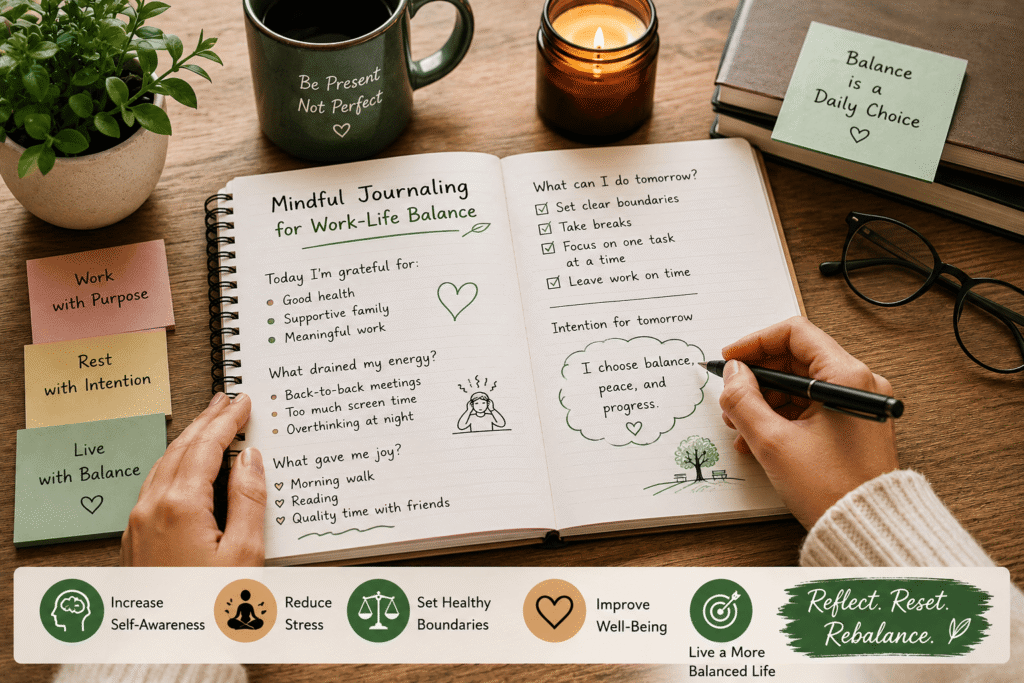
How Mindful Journaling for Work-Life Balance Helps
1. Helps You Identify Stress Triggers
Many professionals feel stressed without fully understanding the source of their stress. Journaling helps identify recurring patterns that affect emotional well-being.
For example, you may notice:
- Certain meetings increase anxiety
- Overworking reduces sleep quality
- Social media distracts your focus
- Lack of boundaries causes exhaustion
Once these patterns become visible, it becomes easier to make intentional lifestyle changes.
2. Encourages Emotional Awareness
Mindful journaling teaches people to observe emotions instead of suppressing them. This emotional awareness improves decision-making, communication, and stress management.
Instead of ignoring frustration or burnout, journaling allows you to process emotions in a healthy and constructive way.
Questions like these can improve self-awareness:
- What drained my energy today?
- What gave me peace today?
- Which responsibilities feel overwhelming?
- What do I truly need right now?
Over time, this practice strengthens emotional intelligence and mental resilience.
3. Supports Better Boundaries Between Work and Personal Life
One major reason for poor work-life balance is the inability to disconnect from work mentally. Many professionals continue thinking about work long after office hours end.
Mindful journaling creates a transition period between work and personal life. Writing for even 10 minutes after work can help clear mental clutter and reduce emotional carryover into personal time.
This habit encourages healthier boundaries by reminding individuals that rest and recovery are productive necessities, not weaknesses.
4. Reduces Mental Overload
Modern professionals constantly consume information through emails, notifications, meetings, and social media. This mental overload often leads to anxiety and reduced focus.
Journaling acts like a mental reset. Writing thoughts on paper helps organize emotions, priorities, and responsibilities.
As a result, individuals often experience:
- Greater mental clarity
- Improved concentration
- Reduced anxiety
- Better sleep quality
- Increased sense of control
This is one reason why mindful journaling for work-life balance has become a recommended wellness habit among productivity coaches and mental wellness professionals.
5. Helps You Reconnect With Personal Priorities
Busy work schedules can cause people to neglect hobbies, relationships, health, and personal goals. Journaling encourages intentional reflection about what truly matters.
You may begin asking:
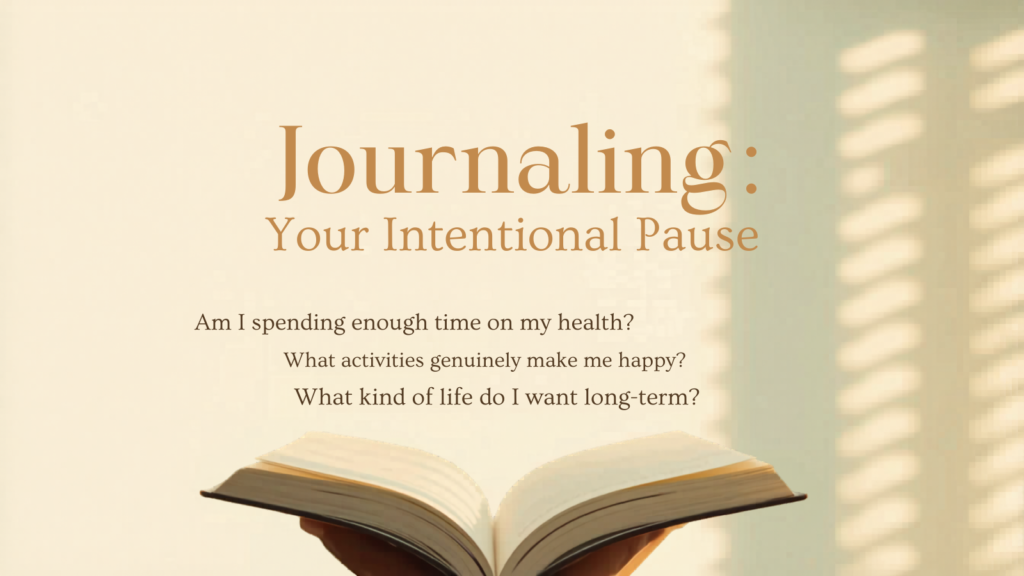
- Am I spending enough time on my health?
- What activities genuinely make me happy?
- Is my current routine sustainable?
- What kind of life do I want long-term?
These reflections help align daily actions with personal values instead of living on autopilot.
Simple Mindful Journaling Practices to Try
Daily Gratitude Journaling
Write down three things you appreciate each day. Gratitude journaling shifts focus away from stress and helps build a more balanced mindset.
End-of-Day Reflection
Spend a few minutes reviewing your day:
- What went well?
- What caused stress?
- What can improve tomorrow?
This practice promotes continuous self-awareness without self-criticism.
Emotional Check-Ins
Pause during stressful days and write honestly about your emotional state. Naming emotions reduces emotional intensity and improves regulation.
Work-Life Boundary Tracking
Track how often work interferes with sleep, family time, exercise, or relaxation. Awareness helps identify unhealthy habits before burnout develops.
Intention Setting
Start mornings by writing a simple intention, such as:
- “Today I will protect my peace.”
- “I will focus on progress, not perfection.”
- “I will take breaks without guilt.”
Intentional thinking supports healthier daily behavior.
Tips for Building a Consistent Journaling Habit
Many people begin journaling enthusiastically but struggle to stay consistent. The key is simplicity and sustainability.
Here are practical tips:
- Start with only 5–10 minutes daily
- Keep your journal accessible
- Write without judging yourself
- Focus on honesty rather than grammar
- Avoid trying to make journaling perfect
- Use prompts if you feel stuck
Consistency matters more than length. Even short daily reflections can create long-term emotional benefits.
Final Thoughts
Achieving balance in modern life is challenging, especially for young professionals navigating demanding careers and personal responsibilities. However, small intentional habits can create meaningful improvements over time.
Mindful journaling for work-life balance offers a practical and affordable way to reduce stress, improve emotional awareness, and reconnect with what truly matters. By regularly reflecting on thoughts, emotions, and daily experiences, individuals can build healthier boundaries and create a more balanced lifestyle.
Most importantly, mindful journaling reminds us that productivity should never come at the cost of mental well-being. Sustainable success begins with self-awareness, emotional clarity, and intentional living.