Introduction
Setting goals is easy. Achieving them is where most people struggle.
Many young professionals start the year with ambitious plans to improve their careers, finances, health, or personal development. However, without a clear system for tracking progress and maintaining focus, those goals often get forgotten within weeks.
This is where journaling for goal setting becomes a powerful tool. A journal is more than a notebook—it is a personal accountability partner that helps you clarify your goals, track your progress, identify obstacles, and stay motivated throughout your journey.
Whether you are aiming for a promotion, building a new skill, improving productivity, or creating healthier habits, journaling can transform vague aspirations into actionable achievements.
In this guide, you’ll learn how to use journaling effectively to set meaningful goals and increase your chances of achieving them.
Why Journaling Helps with Goal Setting
Research in psychology consistently shows that writing down goals increases the likelihood of accomplishing them. Journaling creates a structured space where ideas become plans and plans become actions.
Benefits of Journaling for Goal Setting
- Provides clarity and direction
- Helps organize thoughts and priorities
- Increases accountability
- Tracks progress over time
- Identifies patterns and obstacles
- Boosts motivation and confidence
- Encourages consistent self-reflection
Instead of relying on memory or motivation alone, journaling creates a written roadmap for success.
Step 1: Define What Success Means to You
Before setting goals, take time to reflect on what truly matters.
Many people pursue goals based on societal expectations rather than personal values. Journaling helps you identify what success genuinely looks like in your life.
Journal Prompts
- What do I want my life to look like in one year?
- What areas of my life need improvement?
- What accomplishments would make me feel proud?
- What skills do I want to develop?
- What kind of person do I want to become?
These reflections provide a foundation for setting meaningful and motivating goals.
Step 2: Set Specific and Achievable Goals
One common reason goals fail is because they are too vague.
For example:
Vague Goal:
“I want to be successful.”
Specific Goal:
“I want to complete a professional certification within six months.”
When practicing journaling for goal setting, write goals that are clear, measurable, and realistic.
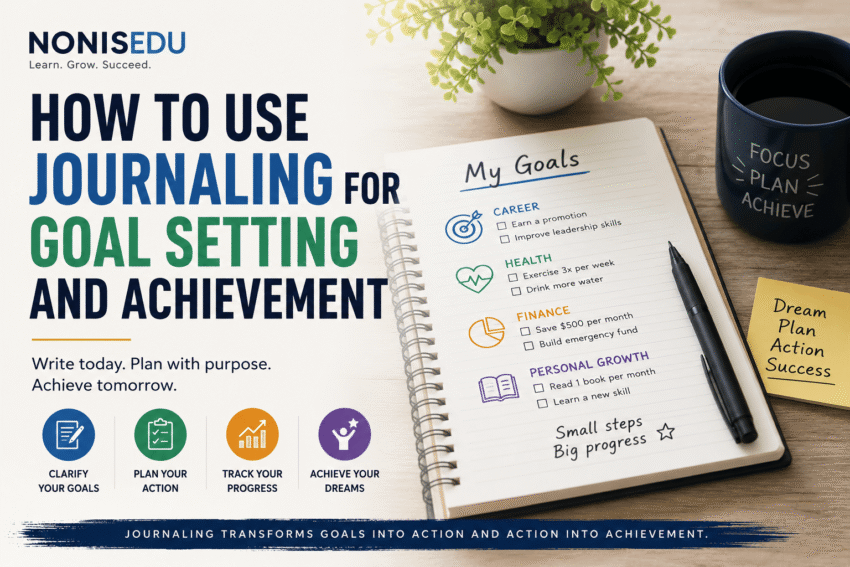
Example Goal Categories
Career Goals
- Earn a promotion
- Improve leadership skills
- Complete professional training
Financial Goals
- Save a specific amount each month
- Build an emergency fund
- Reduce unnecessary spending
Health Goals
- Exercise three times per week
- Improve sleep habits
- Drink more water daily
Personal Development Goals
- Read one book per month
- Improve public speaking skills
- Learn a new language
Specific goals create clear targets and make progress easier to measure.
Step 3: Break Large Goals into Smaller Milestones
Big goals can feel overwhelming.
A journal helps you divide larger objectives into manageable steps that create momentum and reduce procrastination.
Example
Goal: Complete a professional certification in six months.
Milestones:
- Purchase study materials
- Create a study schedule
- Complete one chapter per week
- Take practice exams
- Schedule the final exam
Each milestone becomes a small win that keeps motivation high.
Step 4: Create Daily and Weekly Action Plans
Goals are achieved through consistent actions.
Use your journal to plan daily and weekly tasks that support your larger objectives.
Daily Journal Questions
- What is the most important task today?
- What action moves me closer to my goal?
- What challenge might I face today?
- How will I overcome it?
Weekly Planning Questions
- What progress did I make this week?
- What worked well?
- What needs improvement?
- What are my priorities for next week?
Regular planning transforms goals into ongoing habits.
Step 5: Track Progress Consistently
One of the biggest advantages of journaling for goal setting is visibility.
When progress is recorded, it becomes easier to stay focused and motivated.
Track items such as:
- Tasks completed
- Milestones achieved
- Lessons learned
- Challenges encountered
- New opportunities discovered
Even small improvements become noticeable when documented over time.
Step 6: Reflect on Obstacles and Setbacks
Every goal-setting journey includes setbacks.
Instead of viewing obstacles as failures, use journaling as a tool for learning and growth.
Reflection Prompts
- What obstacle did I encounter?
- What caused this challenge?
- What can I learn from it?
- What will I do differently next time?
This reflective practice helps build resilience and problem-solving skills.
Step 7: Celebrate Wins and Progress
Many people focus only on the finish line and forget to acknowledge progress along the way.
Celebrating achievements reinforces positive behavior and increases motivation.
Use your journal to record:
- Completed milestones
- Positive feedback received
- Personal breakthroughs
- New skills developed
- Lessons successfully applied
Recognizing progress creates momentum for future success.

Effective Journaling Techniques for Goal Achievement
1. Morning Goal Review
Spend five minutes each morning reviewing your goals and identifying your top priorities.
This simple habit keeps your objectives fresh in your mind.
2. Evening Reflection
At the end of each day, evaluate your progress.
Ask yourself:
- What did I accomplish today?
- What could I improve tomorrow?
- What lesson did I learn?
3. Monthly Goal Audit
Review your journal once a month.
Evaluate:
- Progress made
- Goals achieved
- Areas needing adjustment
- New opportunities or priorities
This prevents you from drifting away from your objectives.
4. Gratitude and Success Tracking
Combine goal tracking with gratitude journaling.
Recording both accomplishments and positive experiences helps maintain motivation and a growth-oriented mindset.
Common Mistakes to Avoid
When using journaling for goal setting, avoid these common mistakes:
Setting Too Many Goals
Focus on a few meaningful goals rather than pursuing everything at once.
Ignoring Progress Reviews
Without regular reflection, it becomes difficult to identify what is working.
Being Too Hard on Yourself
Setbacks are part of growth. Use them as learning opportunities rather than reasons to quit.
Writing Without Taking Action
Journaling is most effective when paired with consistent effort and execution.
Final Thoughts
Success rarely happens by accident. It is usually the result of clear goals, consistent action, and regular self-reflection.
Journaling for goal setting provides a practical framework for turning ambitions into achievable outcomes. By defining meaningful goals, breaking them into manageable steps, tracking progress, and learning from challenges, you create a system that supports long-term success.
For young professionals seeking greater focus, productivity, and personal growth, journaling can become one of the most valuable tools in their development journey.
Start today with a simple notebook and a clear intention. The goals you achieve tomorrow often begin with the words you write today.
Read more: The Importance of Journaling , Why Am I Not Journaling?