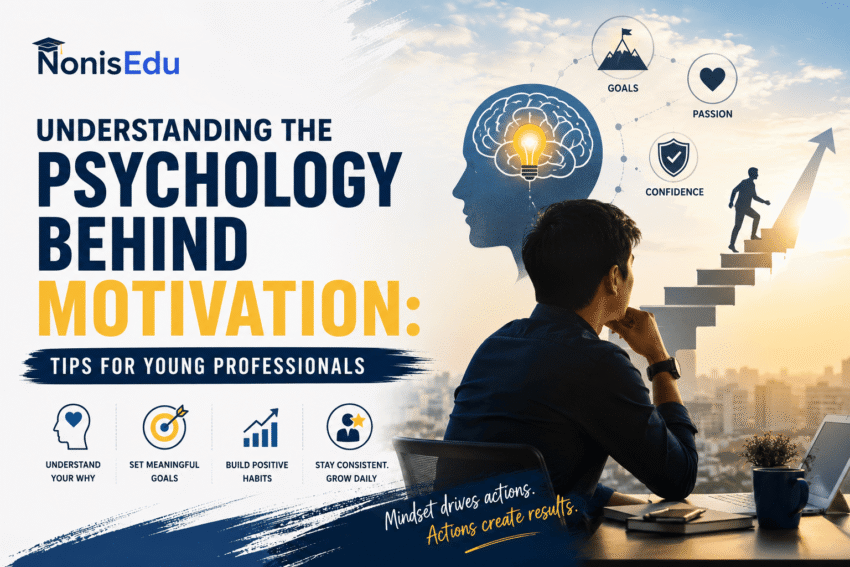
Motivation plays a major role in personal growth, career success, and emotional well-being. However, many young professionals struggle to stay motivated while balancing demanding careers, financial pressure, and personal responsibilities. Understanding the psychology of motivation can help you develop healthier habits, improve productivity, and maintain long-term consistency.
Rather than waiting for motivation to appear naturally, learning how motivation works allows you to take control of your mindset and actions. This article explores the science behind motivation and practical ways young professionals can stay driven even during difficult periods.
What Is the Psychology of Motivation?
The psychology of motivation refers to the study of what drives people to take action, pursue goals, and maintain behaviors. Psychologists explain motivation as the internal process that influences direction, effort, and persistence.
Motivation is generally divided into two categories:
Intrinsic Motivation
Intrinsic motivation comes from internal satisfaction. You do something because it feels meaningful, enjoyable, or personally rewarding.
Examples include:
- Learning a new skill for personal growth
- Exercising because it improves mental health
- Writing or creating because you enjoy it
Extrinsic Motivation
Extrinsic motivation comes from external rewards or pressure.
Examples include:
- Working for a salary or promotion
- Studying to pass an exam
- Completing tasks to receive recognition
Both forms of motivation are important. However, intrinsic motivation usually creates stronger long-term consistency and satisfaction.
Why Young Professionals Often Lose Motivation
Many young professionals experience periods of low motivation. This is completely normal and often connected to psychological and emotional factors.
Burnout and Mental Exhaustion
Long work hours, constant deadlines, and digital overload can drain mental energy. When the brain becomes overwhelmed, motivation naturally decreases.
Fear of Failure
Some individuals avoid taking action because they fear making mistakes. Overthinking and perfectionism often reduce progress.
Lack of Clear Purpose
Without meaningful goals, work can begin to feel repetitive and emotionally empty. Purpose strengthens motivation by connecting daily actions to a larger vision.
Comparing Yourself to Others
Social media and workplace competition can create unrealistic expectations. Constant comparison damages confidence and lowers internal motivation.
Understanding these challenges is an important step in improving the psychology of motivation in daily life.
The Science Behind Motivation and Habits
Motivation is strongly connected to brain chemistry and behavioral patterns. Dopamine, often called the “motivation chemical,” plays a major role in how humans pursue rewards and goals.
Interestingly, dopamine increases not only when we achieve something but also when we anticipate progress. This explains why small wins can create momentum.
Because of this, successful people often rely on habits and routines rather than waiting for emotional motivation. Consistent action trains the brain to repeat productive behaviors automatically.
Tips to Improve Motivation as a Young Professional
Set Smaller, Achievable Goals
Large goals can feel overwhelming. Breaking tasks into smaller steps helps reduce mental resistance and builds confidence through quick wins.
For example:
- Write one page instead of an entire report
- Exercise for 10 minutes instead of one hour
- Study one topic at a time
Small progress creates positive momentum.
Focus on Purpose Instead of Pressure
External rewards alone rarely create long-term fulfillment. Try connecting your goals to personal values and meaningful outcomes.
Ask yourself:
- Why does this goal matter?
- How will this improve my future?
- What kind of person do I want to become?
Purpose-driven goals strengthen the psychology of motivation because they create emotional connection.
Build Consistent Daily Routines
Routines reduce the need for constant decision-making. When productive actions become habits, motivation becomes less important.
Helpful habits include:
- Morning planning
- Daily journaling
- Regular exercise
- Limiting distractions
- Maintaining healthy sleep
Consistency often matters more than intensity.
Celebrate Small Wins
Many people only celebrate major achievements. However, recognizing small improvements increases confidence and motivation.
Even simple accomplishments deserve acknowledgment:
- Completing difficult tasks
- Staying consistent for a week
- Learning something new
- Managing stress effectively
Positive reinforcement encourages the brain to continue productive behavior.
Reduce Mental Clutter
Mental overload weakens focus and motivation. Taking care of your emotional well-being is essential.
Ways to reduce mental clutter:
- Practice mindfulness
- Spend time away from screens
- Journal your thoughts
- Organize your workspace
- Take regular breaks
A calm mind improves clarity and decision-making.
Motivation Is Not Constant
One of the biggest misconceptions is believing successful people feel motivated all the time. In reality, motivation naturally rises and falls.
The key difference is that disciplined individuals continue taking action even during low-energy periods. They rely on systems, habits, and routines rather than emotions alone.
Understanding this can reduce guilt and frustration when motivation temporarily disappears.
Final Thoughts
The psychology of motivation is not about forcing yourself to feel inspired every day. Instead, it involves understanding how the mind works and creating habits that support long-term growth.
Young professionals face many modern challenges, including stress, burnout, comparison, and uncertainty. However, by focusing on purpose, building consistent routines, and celebrating progress, you can develop sustainable motivation that lasts beyond temporary emotions.
Success rarely comes from sudden bursts of inspiration. More often, it comes from small, repeated actions taken consistently over time.