
Summary
How Journaling Helps Emotional Healing. Journaling is more than just putting words on paper — it’s an act of self-care that gently heals emotional wounds. By expressing emotions, gaining clarity, and reframing your thoughts, you nurture both your heart and mind. In essence, how journaling helps emotional healing lies in its ability to reconnect you with your inner self and guide you toward calmness, resilience, and joy.
Introduction
Understanding how journaling helps emotional healing can truly transform your well-being. When emotions feel overwhelming, writing them down offers a safe space to process pain, confusion, or loss. Through journaling, you can release what weighs heavily on your mind and begin to reconnect with yourself. By exploring how journaling helps emotional healing, you’ll uncover a pathway to balance, clarity, and inner peace.

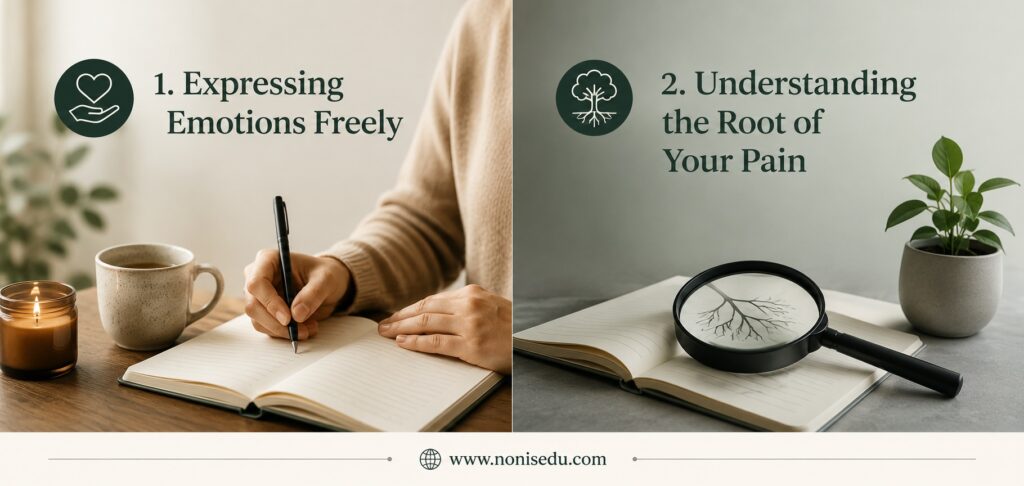
1. Expressing Emotions Freely
One of the most powerful ways journaling helps emotional healing is by giving you a private space to express feelings that you might struggle to share aloud. Writing allows emotions to flow without judgment, helping you release suppressed sadness, anger, or fear. Over time, this practice reduces emotional pressure, leading to a lighter, calmer state of mind.
2. Understanding the Root of Your Pain
When you consistently document your experiences, patterns begin to emerge. These insights reveal the real reasons behind your stress or sadness. Understanding these roots is essential for recovery. As you analyze your thoughts, journaling naturally shifts your focus from confusion to awareness—a key step in emotional healing.
3. Building Emotional Awareness and Acceptance
Journaling encourages reflection and mindfulness. Each entry helps you become more aware of how certain situations affect your emotions. Moreover, it teaches acceptance — understanding that pain is part of growth. With continued writing, you stop resisting your feelings and start learning from them, which is a core part of healing emotionally.
4. Reframing Negative Thoughts
Negative self-talk often worsens emotional wounds. Through journaling, you can identify these destructive thoughts and replace them with positive, realistic perspectives. As you review your older entries, you’ll notice how your mindset shifts — proof that emotional healing is taking place through self-compassion and conscious reframing.
5. Restoring Inner Peace and Hope
Finally, how journaling helps emotional healing is most visible in how it restores hope. By consistently writing, you transform pain into purpose. You begin to see progress, resilience, and renewed strength. This reflection builds gratitude, which naturally fosters emotional stability and peace of mind.

Read more: The Importance of Journaling: 7 Powerful Ways