Introduction
Success rarely happens by accident. While talent, education, and opportunities all play important roles, long-term growth often comes down to having a clear direction and taking consistent action. This is why creating a personal growth plan for young professionals can be one of the most valuable investments you make in your future.
Many young professionals feel overwhelmed by competing priorities, career uncertainty, and the pressure to achieve more in less time. Without a structured plan, it is easy to stay busy without making meaningful progress. A personal growth plan helps you identify your goals, develop important skills, and create a roadmap for continuous improvement.
This guide will walk you through a practical step-by-step process for building a personal growth plan that supports both your professional success and personal well-being.
What Is a Personal Growth Plan for Young Professionals?
A personal growth plan is a structured strategy designed to help you improve specific areas of your life and career. It identifies where you are today, where you want to be in the future, and the actions needed to bridge the gap.
Unlike vague resolutions, a personal growth plan focuses on measurable goals, skill development, and ongoing self-reflection. It serves as a guide that keeps you focused and accountable as you work toward becoming the best version of yourself.
Why Young Professionals Need a Personal Growth Plan
The early stages of a career are filled with opportunities and challenges. Having a personal growth plan can help you:
- Gain clarity about your career direction
- Build valuable professional skills
- Increase confidence and self-awareness
- Improve productivity and focus
- Prepare for future leadership opportunities
- Create a better work-life balance
- Stay motivated during periods of uncertainty
Professionals who actively invest in personal development are often better equipped to adapt to workplace changes and seize new opportunities.
Step 1: Assess Your Current Situation
Before deciding where you want to go, you need to understand where you currently stand.
Take time to evaluate different areas of your life:
Career
- Are you satisfied with your current role?
- What skills do you need to advance?
- What challenges are holding you back?
Personal Development
- What habits support your growth?
- Which habits need improvement?
Relationships
- Do you have supportive professional and personal networks?
Health and Wellness
- Are you maintaining your physical and mental well-being?
Conducting an honest self-assessment helps identify strengths, weaknesses, opportunities, and areas for improvement.
Step 2: Define Your Long-Term Vision
A personal growth plan becomes more effective when connected to a larger vision.
Ask yourself:
- Where do I want to be in five years?
- What kind of professional do I want to become?
- What values are most important to me?
- What lifestyle do I want to create?
Your answers will help establish a meaningful direction for your growth journey.
For example, your vision might be:
“I want to become a respected project manager who leads high-performing teams while maintaining a healthy work-life balance.”
A clear vision creates motivation and purpose.
Step 3: Set Specific Growth Goals
Once your vision is clear, break it into smaller, actionable goals.
Effective goals should be SMART:
- Specific
- Measurable
- Achievable
- Relevant
- Time-bound
Examples include:
- Complete a leadership certification within six months.
- Read one professional development book per month.
- Improve public speaking skills by joining a local speaking group.
- Build a professional network of 50 new industry connections this year.
Specific goals make progress easier to track and maintain.
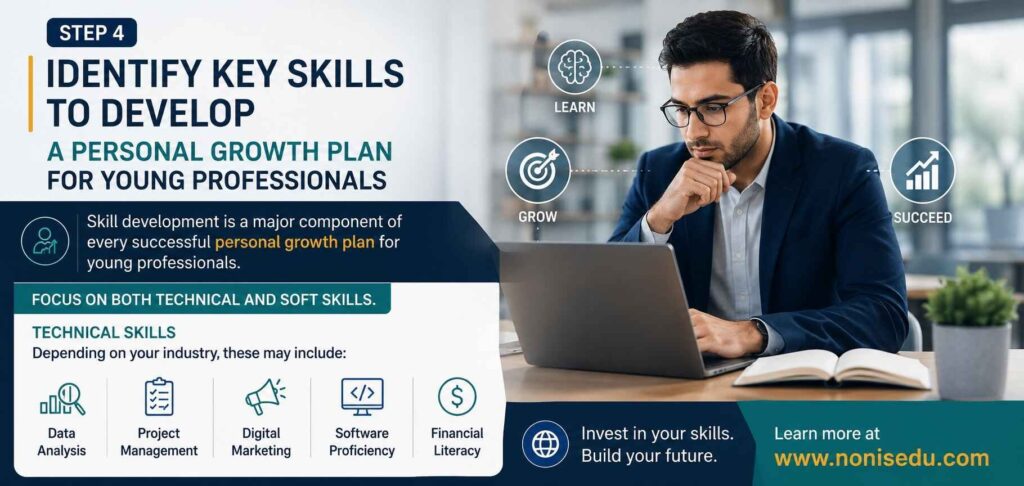
Step 4: Identify Key Skills to Develop a Personal Growth Plan for Young Professionals
Skill development is a major component of every successful personal growth plan for young professionals.
Focus on both technical and soft skills.
Technical Skills
Depending on your industry, these may include:
- Data analysis
- Project management
- Digital marketing
- Software proficiency
- Financial literacy
Soft Skills
These are valuable across nearly every profession:
- Communication
- Leadership
- Emotional intelligence
- Problem-solving
- Time management
- Adaptability
Prioritize skills that align with your long-term career goals.
Step 5: Create an Action Plan
Goals become reality through consistent action.
For each goal, identify:
- The specific actions required
- Resources needed
- Deadlines
- Progress milestones
For example:
Goal:
Improve leadership skills.
Actions:
- Read one leadership book every month.
- Attend leadership workshops quarterly.
- Volunteer to lead a workplace project.
- Seek mentorship from an experienced manager.
Breaking goals into smaller tasks makes them easier to achieve.
Step 6: Build Positive Daily Habits
Personal growth is driven by daily habits more than occasional bursts of motivation.
Consider incorporating habits such as:
- Morning planning sessions
- Daily journaling
- Reading for 20 minutes
- Weekly goal reviews
- Regular exercise
- Mindfulness practices
Small actions performed consistently create significant results over time.
Step 7: Track Your Progress
Without measurement, it is difficult to know whether your efforts are working.
Schedule regular reviews:
Weekly Reviews
- What progress did I make?
- What challenges did I encounter?
- What adjustments are needed?
Monthly Reviews
- Which goals are on track?
- Which goals need more attention?
Tracking progress helps maintain accountability and momentum.
Step 8: Seek Feedback and Mentorship
Growth often accelerates when you learn from others.
Consider seeking feedback from:
- Supervisors
- Mentors
- Colleagues
- Industry professionals
Constructive feedback provides valuable insights that may be difficult to see on your own.
Mentorship can also help you avoid common mistakes and identify opportunities for advancement.
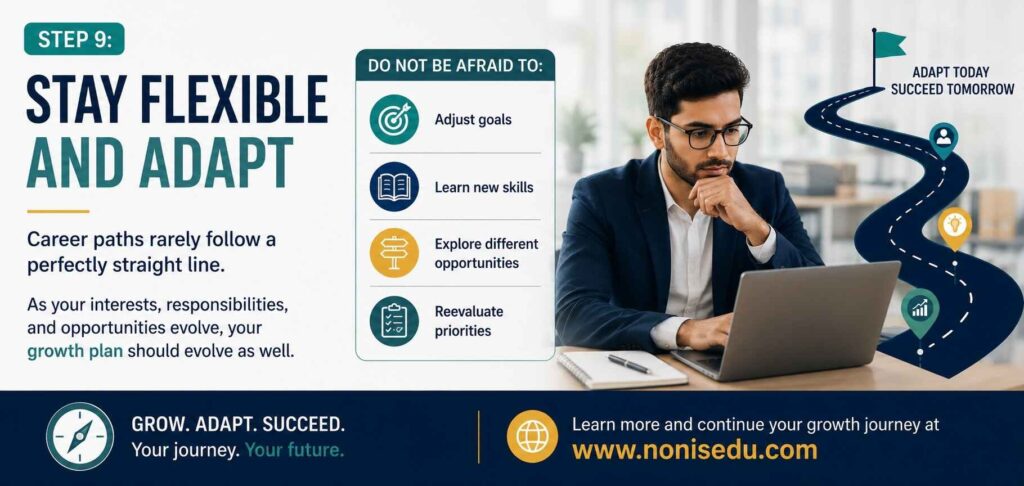
Step 9: Stay Flexible and Adapt
Career paths rarely follow a perfectly straight line.
As your interests, responsibilities, and opportunities evolve, your growth plan should evolve as well.
Do not be afraid to:
- Adjust goals
- Learn new skills
- Explore different opportunities
- Reevaluate priorities
Flexibility helps ensure your personal growth plan remains relevant and realistic.
Common Mistakes to Avoid
When creating a personal growth plan, avoid these common pitfalls:
Setting Too Many Goals
Focusing on too many objectives can dilute your efforts.
Ignoring Progress Reviews
Regular reflection is essential for improvement.
Comparing Yourself to Others
Your growth journey is unique.
Relying Solely on Motivation
Systems and habits are more reliable than motivation alone.
Neglecting Well-Being
Professional success should not come at the expense of mental and physical health.
Final Thoughts
Creating a personal growth plan for young professionals is one of the most effective ways to take control of your future. Instead of drifting through your career without direction, a structured plan helps you develop valuable skills, stay focused on meaningful goals, and continuously improve over time.
Remember that personal growth is not about perfection. It is about consistent progress, learning from challenges, and becoming a stronger, more capable version of yourself. By investing in your development today, you are creating opportunities that can positively impact your career and life for years to come.
Start small, stay consistent, and trust the process. The steps you take today can shape the professional you become tomorrow.
Read more How to Cultivate a Personal Growth Mindset as a Young Professional