Brief Summary
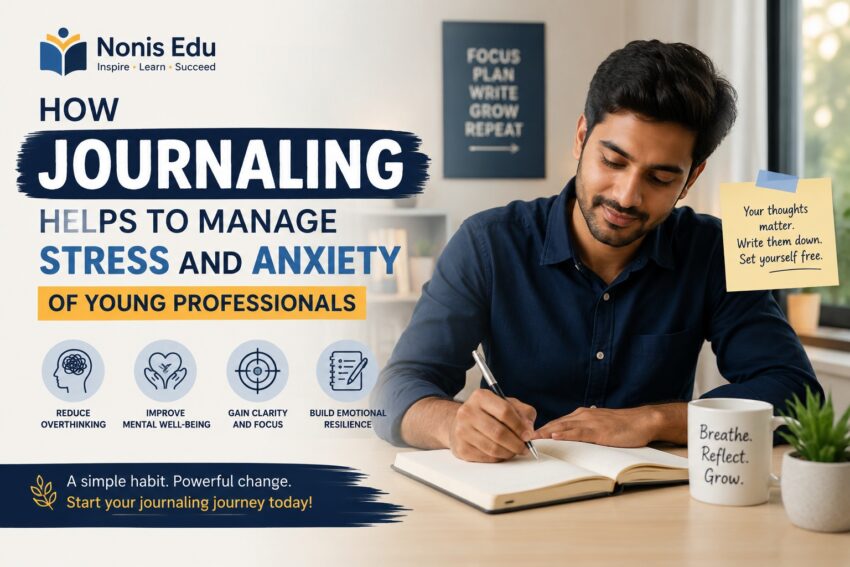
This article explores how journaling supports young professionals in managing stress and anxiety. Through emotional awareness, mental clarity, positive reflection, and better work-life balance, journaling becomes a simple yet powerful practice to boost well-being and resilience in modern workplaces.
Introduction
In today’s demanding work culture, many young professionals face overwhelming stress and anxiety daily. Balancing deadlines, expectations, and personal life can be exhausting. Fortunately, journaling has emerged as a powerful and practical method to manage stress and anxiety effectively. By simply writing for a few minutes a day, individuals can process emotions, clarify thoughts, and reduce mental tension naturally.
1. Journaling Builds Emotional Awareness
One of the most significant benefits of journaling is its ability to boost self-awareness. Writing regularly helps professionals identify emotional triggers behind stress and anxiety. When thoughts are expressed on paper, hidden patterns become visible. As a result, individuals can respond to challenges thoughtfully instead of reacting impulsively.
2. Writing Brings Mental Clarity
A cluttered mind often leads to unnecessary stress and anxiety. Journaling allows young professionals to unload overwhelming thoughts onto paper. This process clears the mind, enhances focus, and creates a sense of calm. By reviewing what they’ve written, professionals can find logical solutions instead of staying trapped in emotional chaos.
3. Journaling Encourages Positive Reflection
Consistent journaling fosters gratitude and reflection. Noting down small wins, positive experiences, or lessons learned each day helps shift attention from problems to progress. Over time, this habit reduces negative thinking—the main driver of stress and anxiety—and strengthens emotional balance.
4. Journaling Promotes Work-Life Balance
Many young professionals struggle to disconnect after work. By writing a short reflection before bed or at the end of the workday, they can symbolically close the chapter on professional stress. Journaling helps them transition from “work mode” to “personal time,” improving sleep and relaxation.
5. Journaling Creates Long-Term Resilience
Managing stress and anxiety is not just about short-term relief—it’s about building long-term emotional strength. Over time, journaling becomes a tool for resilience. When professionals revisit their past entries, they often realize how much they’ve grown and how many challenges they’ve already overcome.

Learn more about How Journaling Helps Young Professionals Overcome Daily Challenges